Air-Drying Still Needs A Plan
Air-drying sounds passive, but hair usually behaves better when the first ten minutes have some structure. The goal is not to force every strand into place. It is to remove excess water, add the right kind of slip, and let the hair dry without being roughed up every time you pass a mirror.
Start thinking about the finish before you leave the shower. Smooth, piecey, wavy, soft, fluffy, and sleek all ask for different handling. If you wait until the hair is half dry and annoyed, your options shrink quickly.
The routine can stay simple. It just needs a sequence.
Remove Water Without Scrubbing
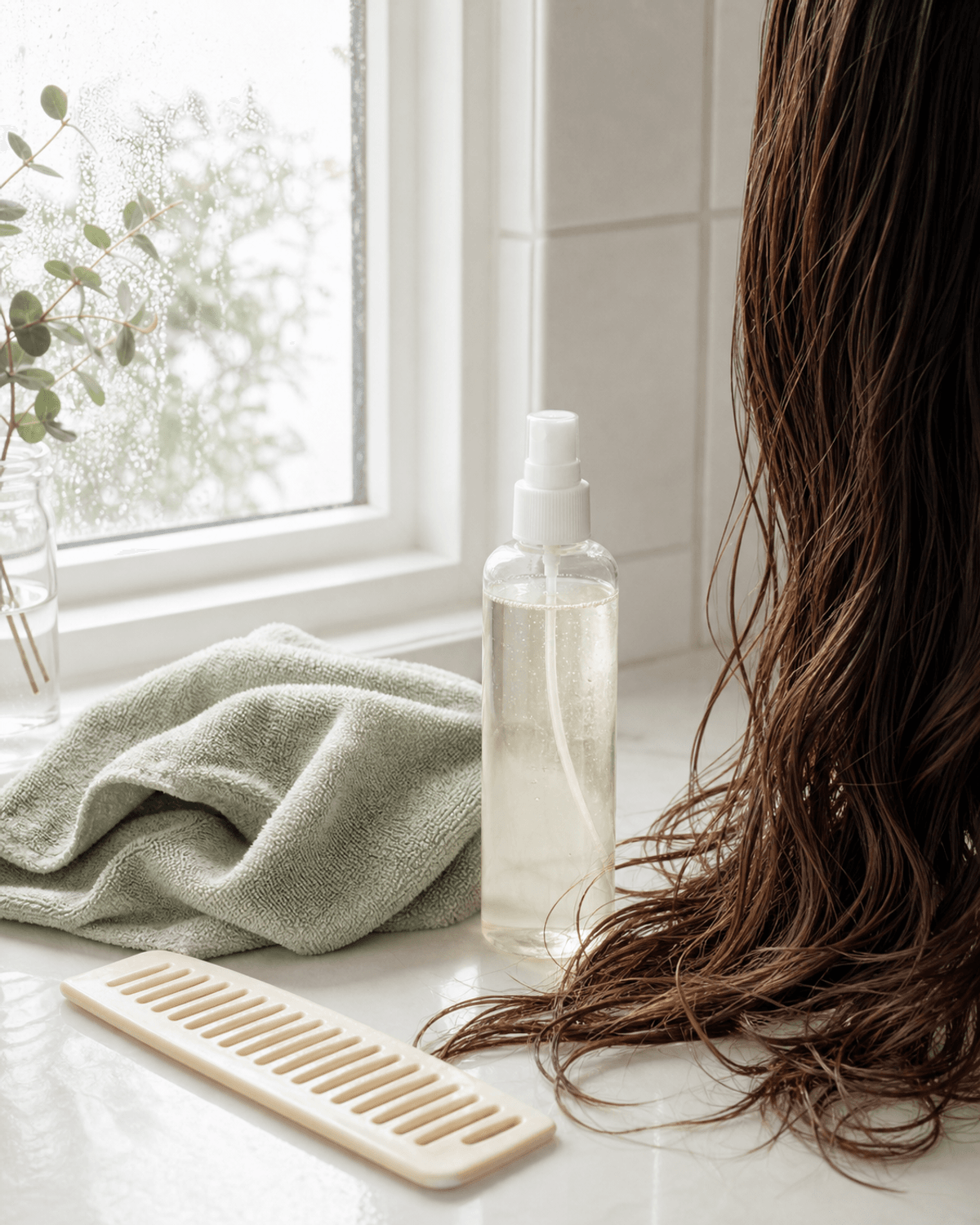
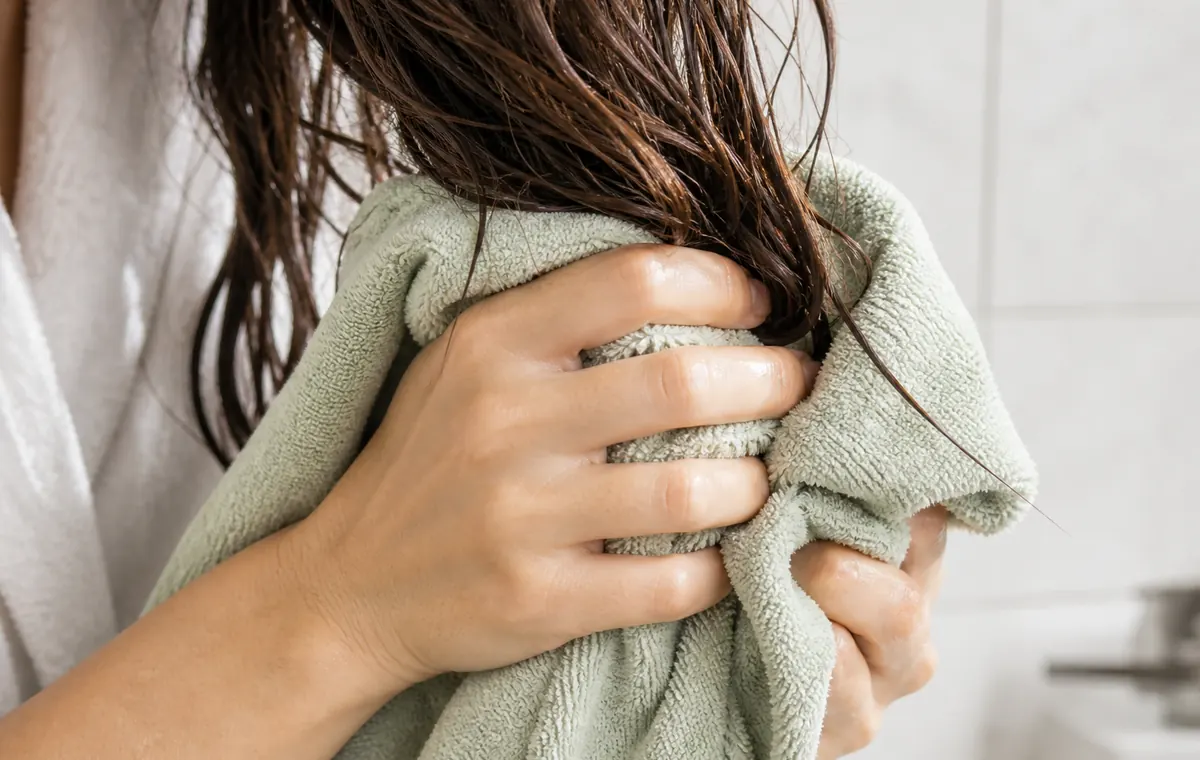
Friction is where many air-dry routines begin to fall apart. Instead of rubbing a towel over the hair, squeeze sections gently with a microfiber towel or soft cotton shirt. Work from mid-lengths to ends, then lightly press near the roots if they hold water.
Hair does not need to be dripping before you apply product, but it should not be bone dry either. Most leave-ins and styling creams spread best when the hair is damp enough to distribute them evenly.
If your roots get flat, avoid wrapping the towel tightly on top of the head for too long. Lift and press rather than compressing everything into the scalp.
Detangle From The Ends Up
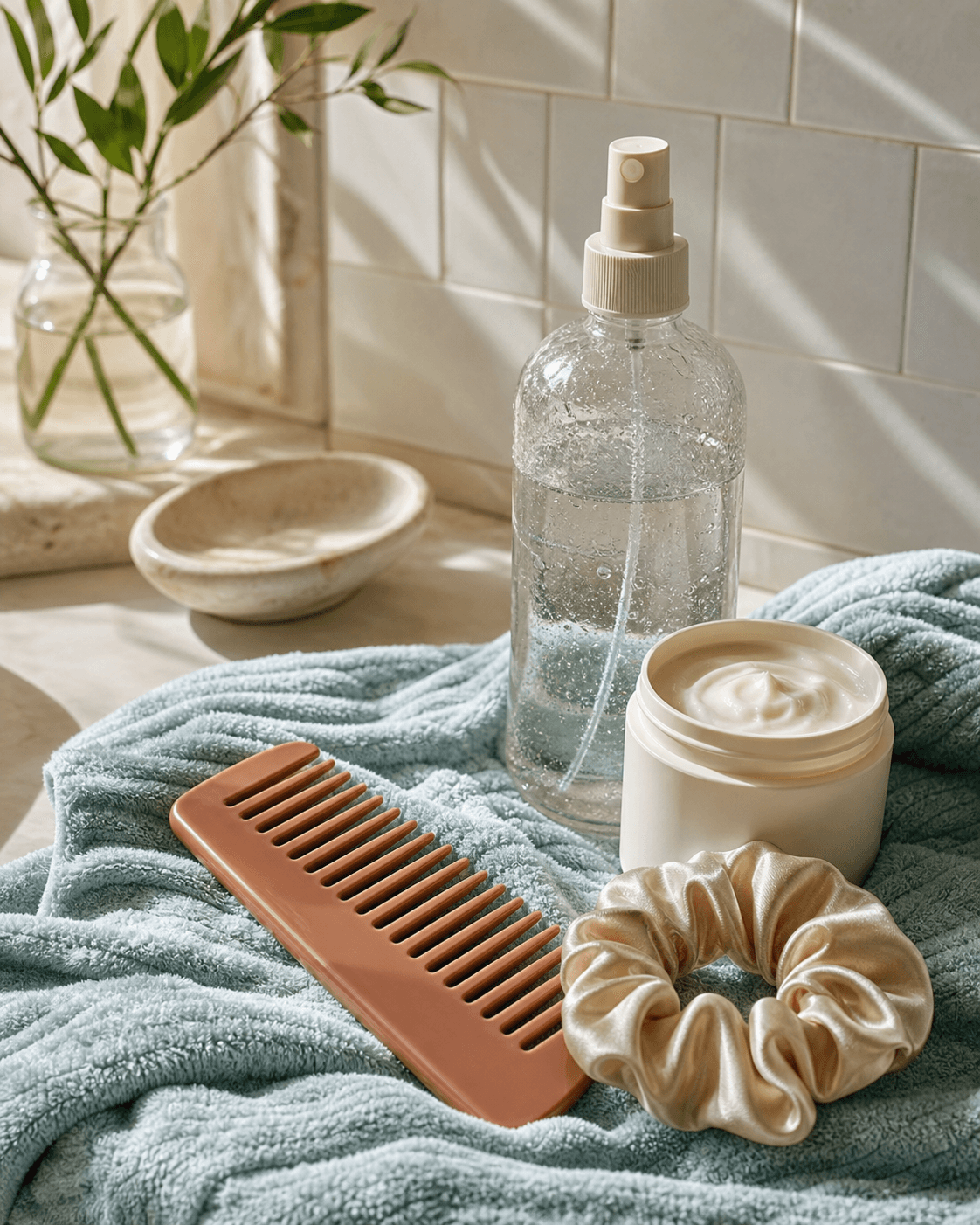
Use a wide-tooth comb, fingers, or a brush designed for wet hair, depending on what your texture tolerates. Begin at the ends and work upward in small sections. Pulling from the root first can turn one knot into a longer argument.
This is also the moment to decide your part. Once hair begins drying around a shape, changing it later can create frizz and uneven volume. If you like lift, set the part loosely rather than making a severe line.
For waves or curls, detangle before scrunching. For straighter hair, comb once, then stop touching it so the surface can settle.
Choose One Styling Idea
Air-drying gets messy when too many products ask for different finishes. A leave-in conditioner supports softness. A light cream can reduce puff. A gel can encourage shape. A smoothing serum can polish ends. Choose the main problem you want to solve first.
Apply product through the mid-lengths and ends before adding anything near the roots. If your hair is fine, use less than the label suggests and add only where dryness or frizz actually appears. If your hair is thick, sectioning can help a small amount work harder.
The right amount should make hair feel conditioned, not coated.
Let The Drying Phase Be Boring
Once the shape is set, leave the hair alone as much as possible. Touching damp hair repeatedly can break up clumps, raise frizz, and make the finished texture look less intentional. If you need volume, lift at the roots with your fingers once or use clips while the hair is still damp.
When hair is fully dry, soften any stiffness with clean hands. Add a tiny amount of oil or serum only to the ends if they look rough. The quietest air-dry routine is not the one with no effort. It is the one that puts the effort early, then lets the hair finish without being micromanaged.