Start With Less Than Looks Necessary
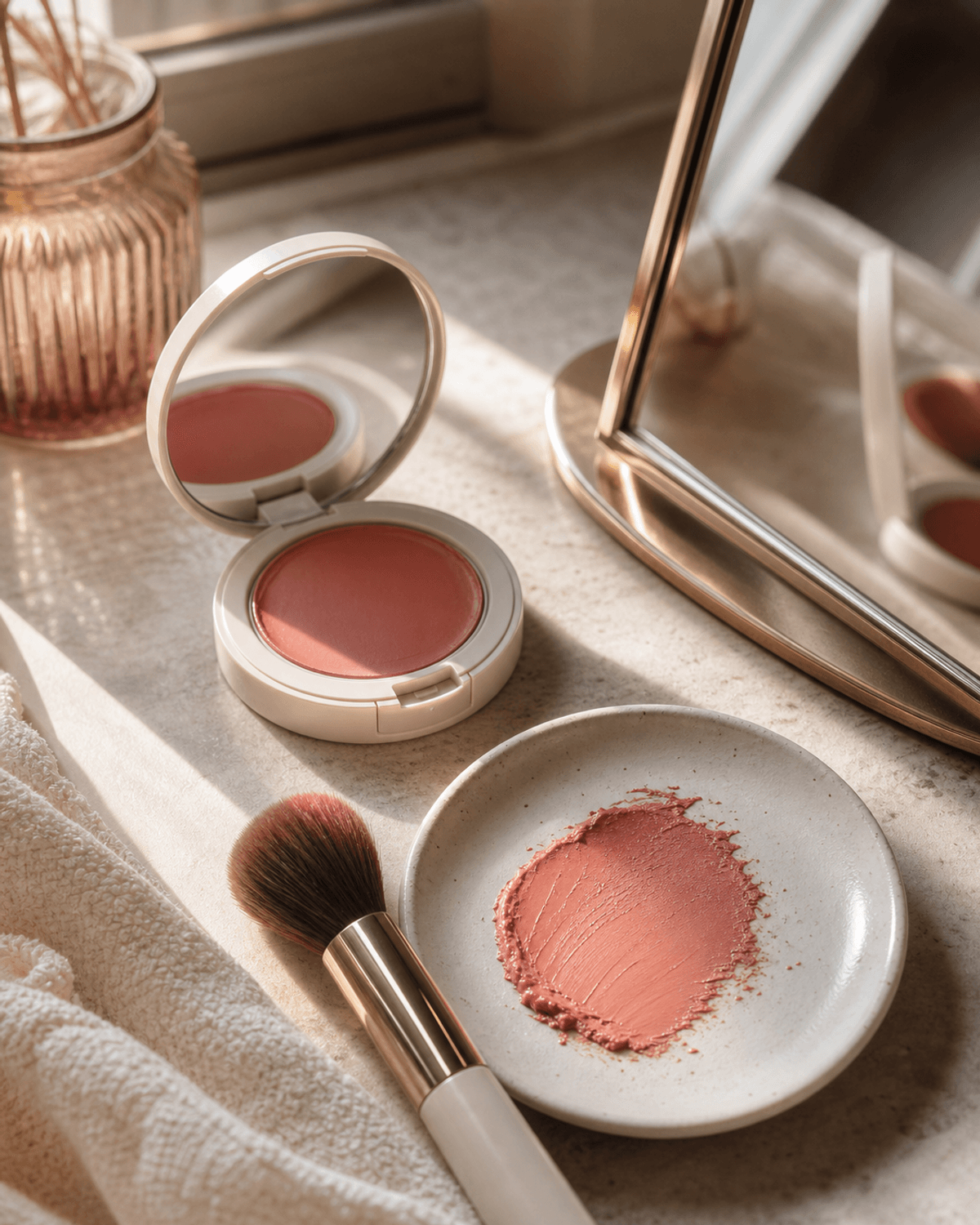
Cream blush is persuasive because it looks alive on skin. It can also become too much before you realize it, especially near a window or under a bright bathroom light. Start with a smaller amount than your instinct wants, then build only where the face still looks flat.
Warm the color on the back of your hand or fingertip first. This thins the texture and keeps the first touch from landing as a stamp. If you use a brush, tap into the product and work a little off before touching the cheek.
The best placement is rarely one universal dot. It depends on your face shape, your base coverage, and where your cheeks naturally flush.
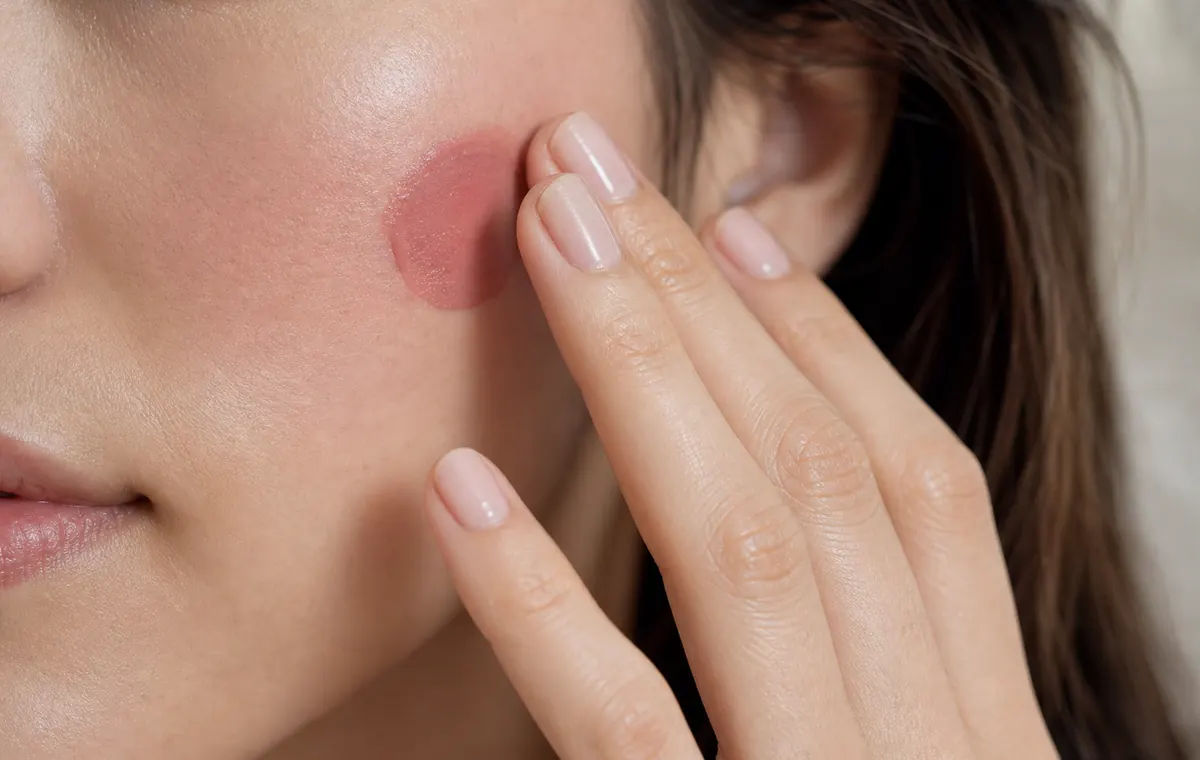
Find The Natural Lift Point
Smile gently, then relax your face. The raised apple you see while smiling moves when your expression drops, so use it as a clue rather than a final destination. For most faces, blush looks fresher when it starts slightly higher than the roundest part of the cheek.
Tap color along the upper cheek, then blend toward the temple instead of dragging it down toward the mouth. This keeps the warmth lifted without making the face look sculpted. If your face is long, keep some color closer to the center. If your face is round, carry the blend a little outward.
The product should fade at the edges. A visible border is what makes cream blush look difficult, not the color itself.
Match Texture To The Rest Of The Face
A dewy blush on a matte base can look charming if the contrast is intentional. It can also look like one shiny patch. Before adding more pigment, check whether the issue is color or finish. Sometimes a bare fingertip pressed around the edge is enough to settle it.
If your skin tint is still wet, apply blush early and let the layers become one. If your base has already set, use tapping motions and avoid wiping across coverage. Powder only after cream products are where you want them.
For very luminous formulas, keep the glow on the high part of the cheek and avoid bringing it too close to texture around the nose.
Use Lip And Eye Color As A Guide
Cream blush feels most believable when it belongs to the rest of the face. A rose cheek with a bare lip can look fresh; a terracotta cheek with a soft brown pencil can look grounded. The point is not matching everything exactly, but keeping the temperature in conversation.
If the blush suddenly looks too bright, do not erase it immediately. Tap a little of your base product around the edge, then add lip balm or a soft lip color. Faces often read differently once the mouth has some balance.
Color should make the face look awake before it makes the makeup look impressive.
Keep A Daylight Check
Cream blush can look perfect in the bathroom and theatrical outside. Before deciding it is finished, turn toward a window or use the most honest light available. Check the edge near the nose, the height near the eye, and the outer blend near the hairline.
Carry less product than you think for touch-ups. A clean finger or small brush can revive what is already there without adding a new layer. Good blush placement should disappear into expression. It should look like you, only better rested and a little more pleased with the morning.