Longevity Is Not The Same As Volume
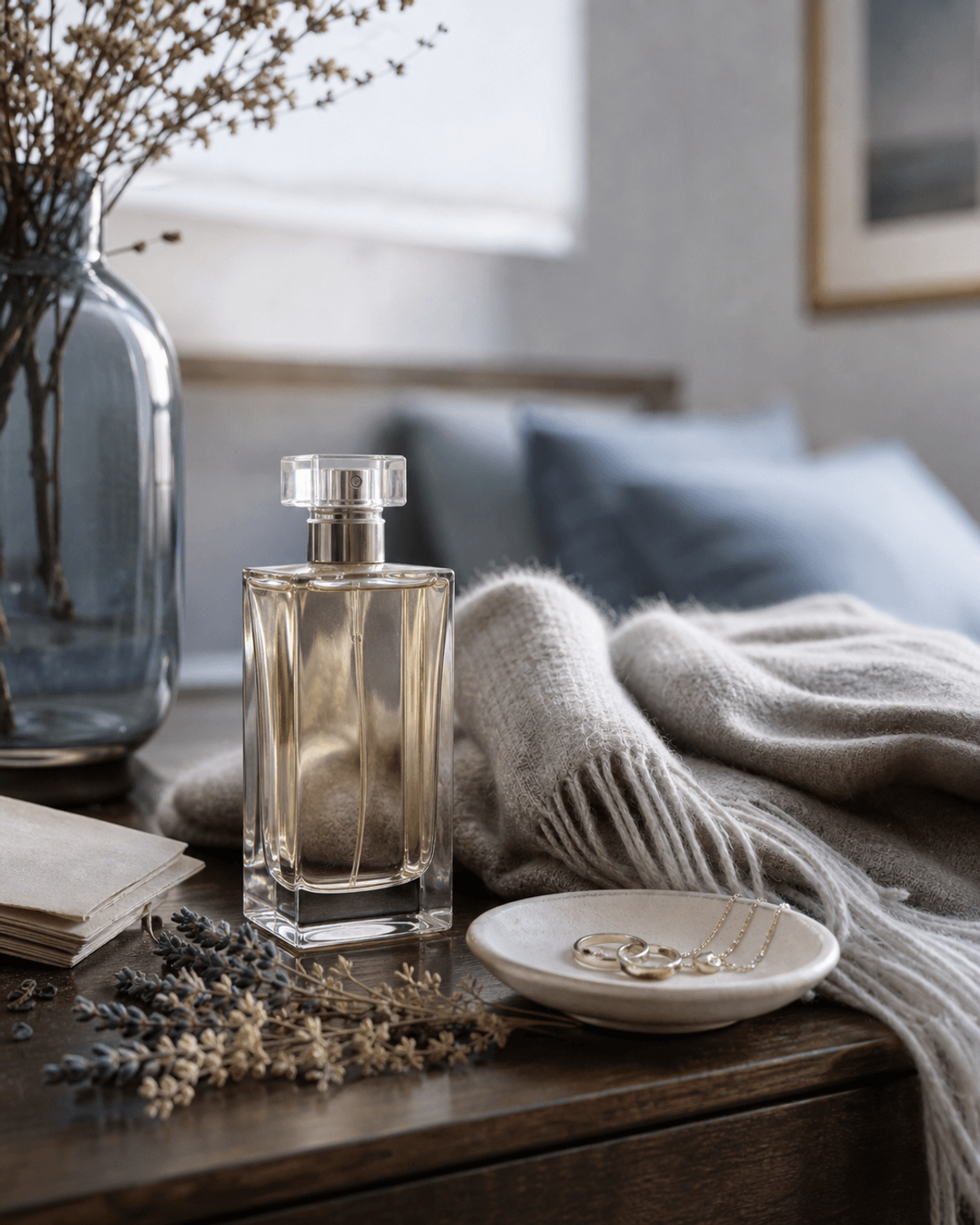
Making fragrance last does not have to mean making it announce itself from across the room. The better goal is a soft return: a trace when you move, a little warmth on fabric, a reminder at the end of the day that does not feel like a cloud following you around.
Perfume lasts differently on every person. Skin temperature, dryness, clothing, weather, and the formula itself all matter. Instead of chasing a fixed number of hours, build a routine that gives the scent somewhere comfortable to sit.
The most elegant wear is usually discovered close up.
Start With Skin That Is Not Parched
Dry skin can make fragrance vanish quickly. You do not need a scented body cream, and you do not need to layer products from the same collection. A plain moisturizer on pulse points can give perfume a more even base.
Apply moisturizer first, let it settle, then spray. If the skin is still slippery, the fragrance may smear rather than land. If the skin is completely dry and tight, the top notes can flash off before the scent has a chance to unfold.
Wrists, inner elbows, and the upper chest can work, but choose one or two areas. More placement is not always more grace.
Stop Rubbing The Wrists Together
The wrist rub is satisfying, but it can make the opening feel muddled. Spray and let the fragrance dry on its own. If you want to share the scent between wrists, touch them together lightly once, without grinding the skin.
Give perfume a few minutes before judging it. Many scents are sharp at first and softer after the alcohol lifts. Deciding too quickly can lead to extra sprays that feel excessive twenty minutes later.
The first impression is only the door opening. The real wear happens after the room quiets.
Use Fabric With Care
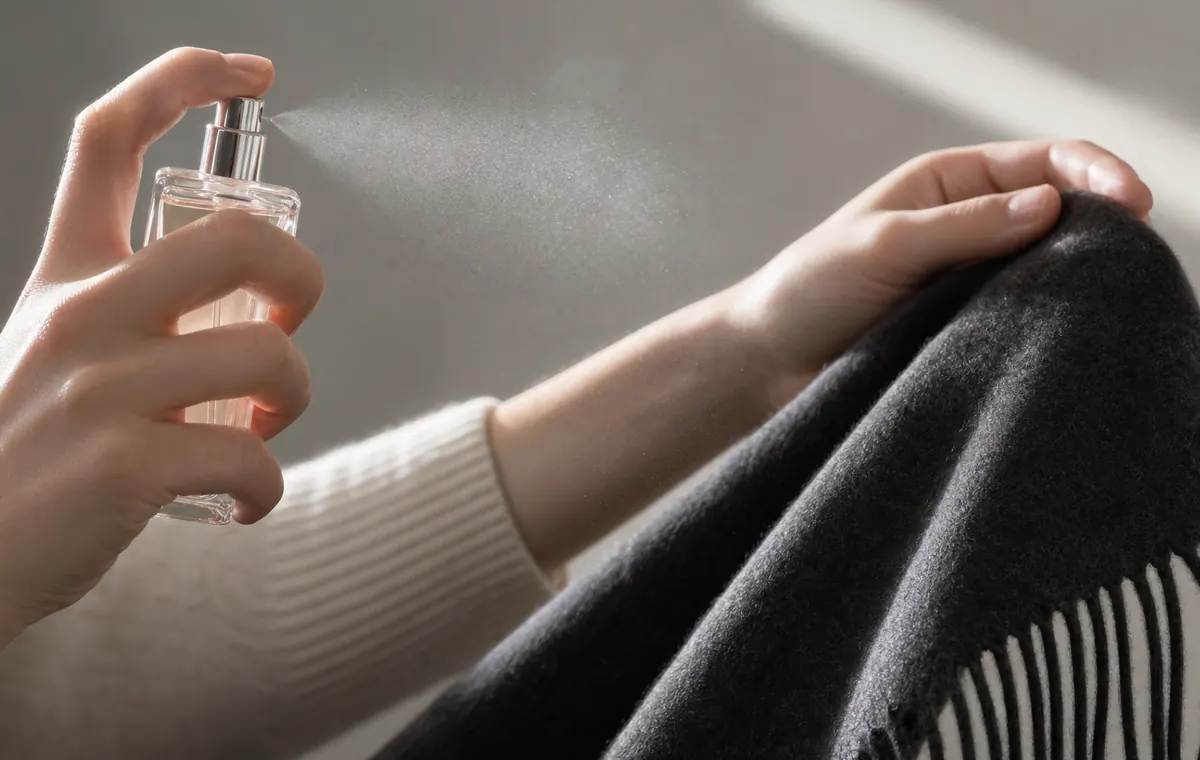
Fabric can hold fragrance beautifully, especially scarves, coat collars, and the inside of a sweater. It can also stain delicate materials or hold a scent longer than you want. Test on an inconspicuous area when the fabric matters.
Spray from a little distance and avoid soaking one spot. Wool, cotton, and heavier weaves tend to carry scent more naturally than silk or fragile synthetics. A scarf can become a soft scent anchor, but it should not compete with the skin.
If you rotate fragrances often, keep fabric spraying occasional. Yesterday’s amber and today’s green floral may not be friends.
Refresh With Intention
If you want to refresh later, use one small spray in a lower-projection place: under the collar, behind the knees, or lightly on a scarf. Reapplying to the same warm pulse points can make the top notes stack while the base is still present.
Pay attention to context. A dinner table, office, train, or shared car is not the place for a dramatic second act. Fragrance is personal, but it is also social air.
The most memorable scent often stays close. It lasts because it is placed well, not because everyone else has to notice it first.