Start With The Parts That Usually Disappear
Long-day makeup is less about making everything stronger. It is about knowing which parts fade, crease, shine, or transfer first. For some faces that means concealer around the nose. For others it is blush, brow shape, or a base that looks tired by midafternoon.
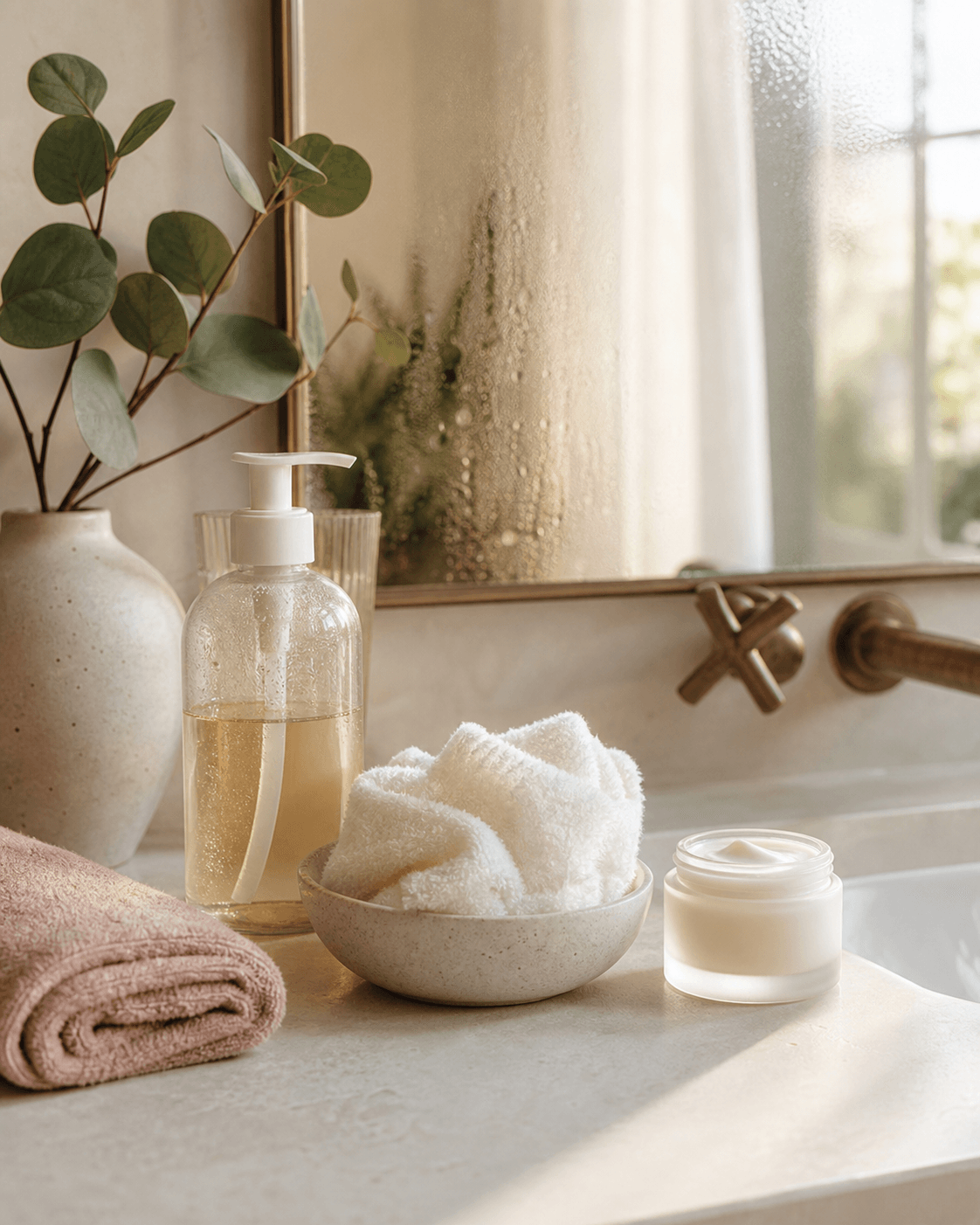
Begin with skin prep that leaves the face comfortable but not slippery. A rich cream can make makeup slide before lunch. A dry surface can make base cling and separate. Give moisturizer a minute to settle, then use less complexion product than feels exciting.
Thin layers have a better chance of aging politely.
Place Coverage Only Where It Earns Its Keep
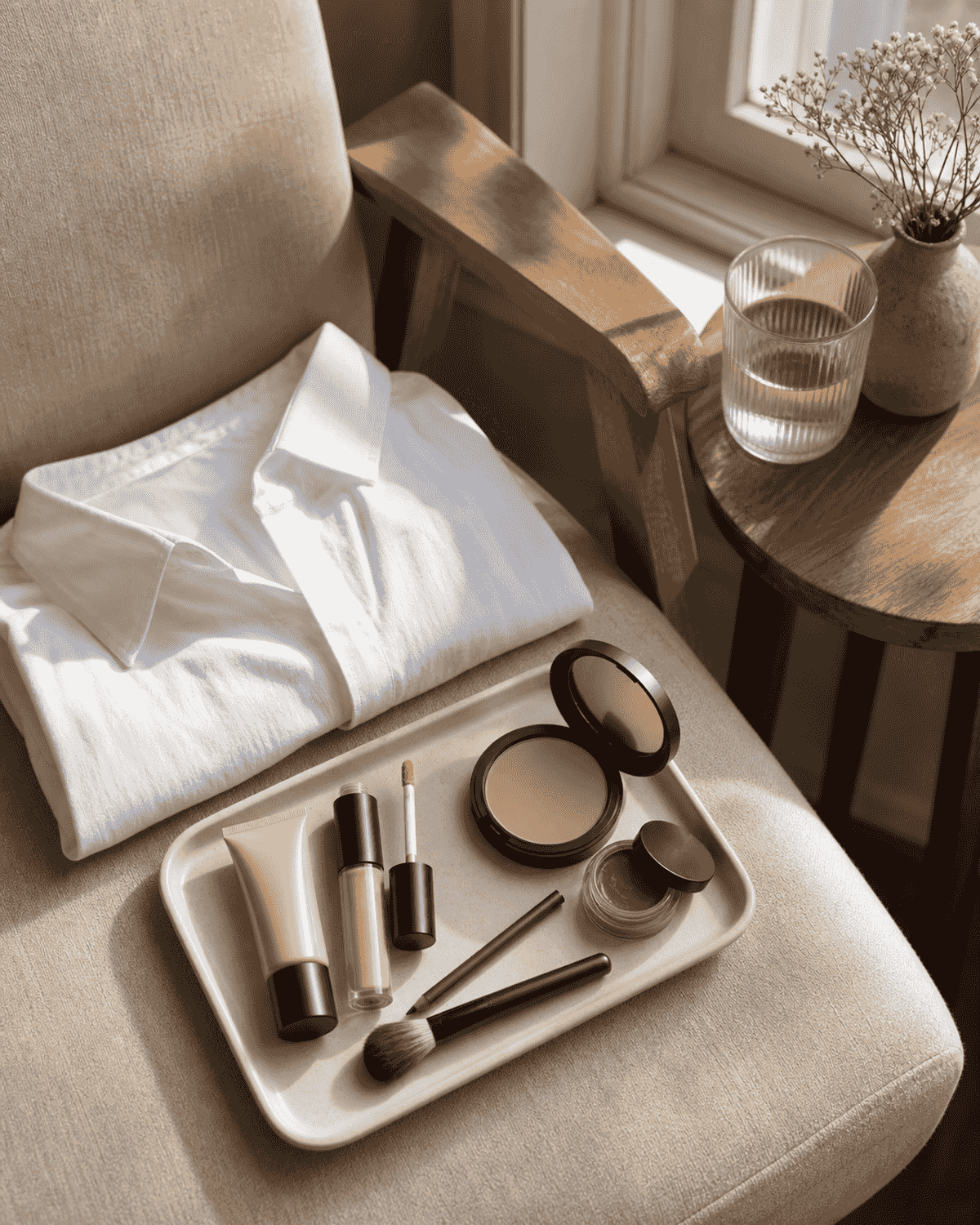
Use a light base or skin tint where it improves the general tone, then switch to concealer for the small areas that need more help. Around the nostrils, under the inner eye, on a mark, or at the chin often matters more than a full coat across the cheeks.
Let each layer sit for a moment before adding more. Makeup can look unfinished while it is still wet, then soften into the skin after a few minutes. If you keep correcting too early, the face can become heavier than the day requires.
The goal is not perfect coverage at 8 a.m. It is believable coverage at 5 p.m.
Use Powder As A Map, Not A Blanket
Powder works best when it goes where the day actually causes trouble. Press a small amount beside the nose, under glasses, around the mouth, or wherever shine turns into movement. Leave the high cheek and outer face more alive if your skin allows it.
If you powder everything, cream color can look flat and texture can look louder. If you powder nothing, concealer may crease before you have left the house. The middle path is usually more elegant than either rule.
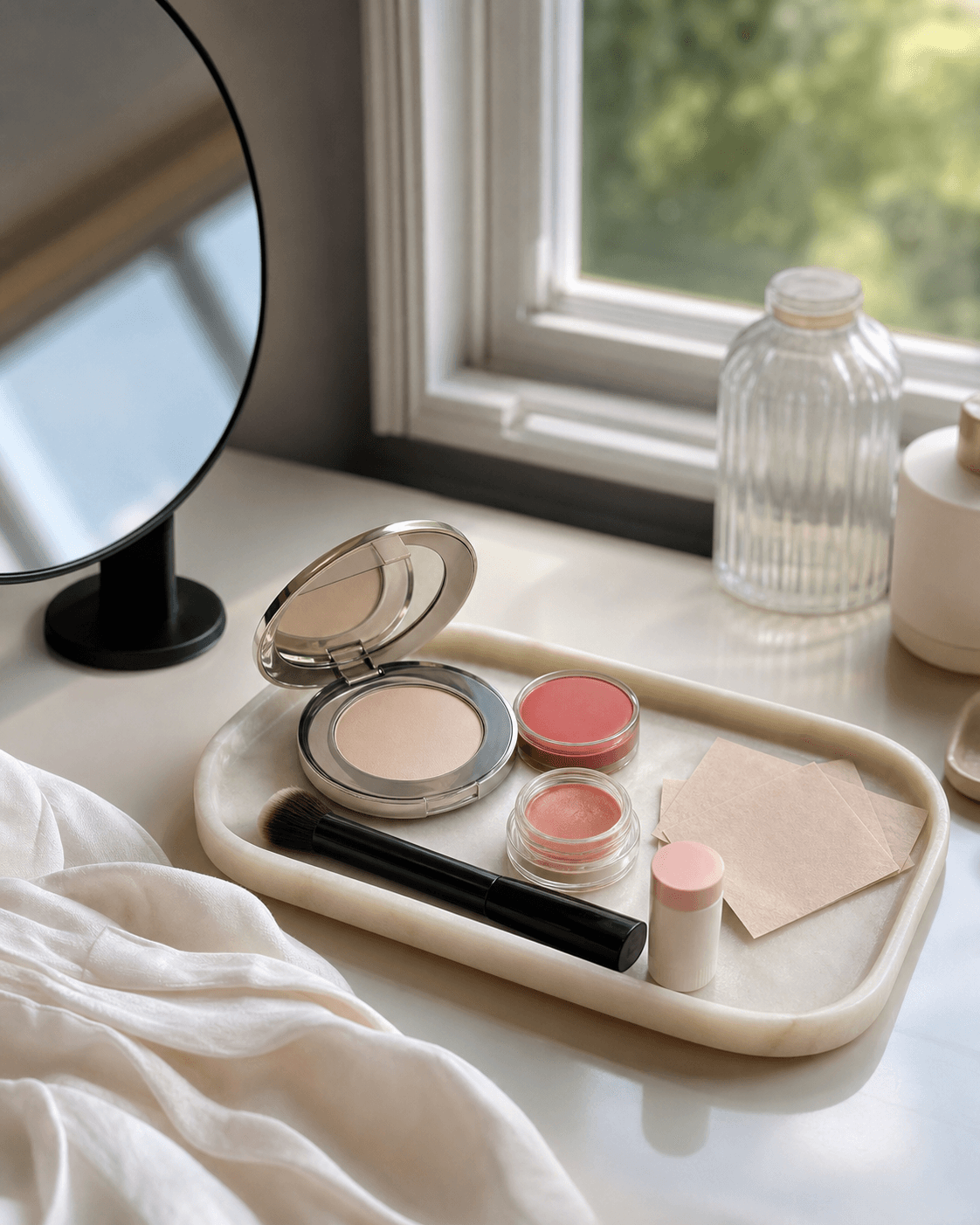
Carry blotting paper, a tissue, or a small powder if needed. Touching up should reduce shine, not add another full face.
Choose Color That Fades Kindly
Blush, bronzer, and lip color need to look good after they soften. Cream formulas can become more natural as the day goes on, while some powders hold structure better in heat. Choose based on your face, not the category.
Apply cheek color slightly higher than you think, then blend the edges carefully. A long day will already lower the effect. A color placed too low in the morning can make the face look tired later.
For lips, pick a shade that leaves a decent stain or looks intentional when topped with balm. A perfect lip that only survives the first drink is not a long-day plan.
Build In One Small Reset
Most makeup does not need to be redone. It needs one quiet reset. Press away oil, smooth the edge of concealer with a clean finger, revive lip color, and add a touch of blush only if the face has gone flat.
Do not keep layering over texture that wants to be removed. If a spot of base has broken up, lift the loose product first, then correct lightly. Long-day makeup looks better when it has been edited, not repeatedly covered.
The best version still looks like you at the end of the day. Just a little more gathered.